Search Engine Marketing - The Basics
In the vast and ever-expanding digital landscape, getting your business noticed can feel like shouting into a hurricane. That's where Search Engine Marketing (SEM) comes in. More than just a buzzword, SEM is a powerful strategy that helps businesses increase their visibility in search engine results pages (SERPs), ultimately driving more traffic and potential customers to their websites.
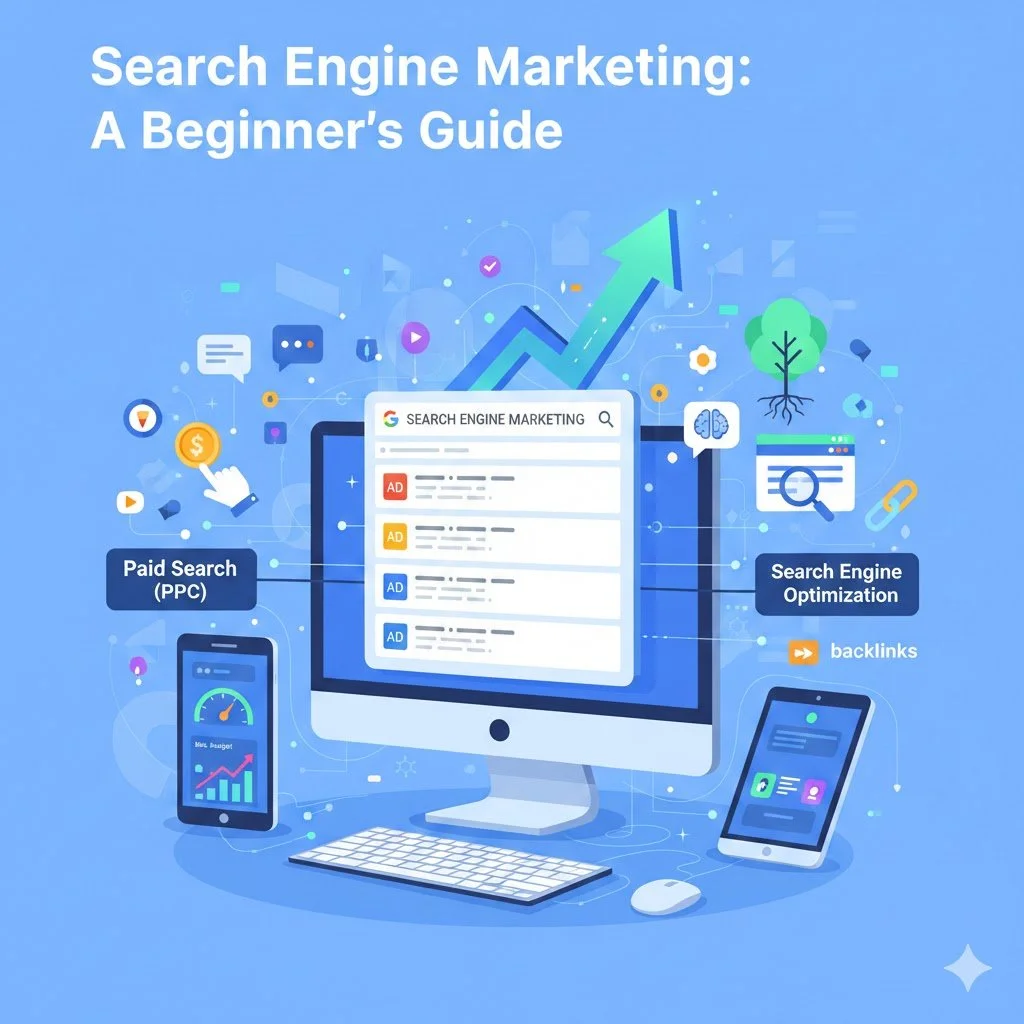
What is Search Engine Marketing?
At its core, SEM encompasses all efforts to make your website appear higher in search engine results. While it's often used interchangeably with "paid search," SEM is actually a broader term that includes both paid and organic strategies.
Here's a breakdown of its key components:
Paid Search (PPC - Pay-Per-Click): This is the most commonly recognized aspect of SEM. Businesses bid on keywords relevant to their products or services, and when a user searches for those keywords, their ads appear at the top or bottom of the SERP. They pay a fee each time their ad is clicked. Platforms like Google Ads (formerly Google AdWords) and Microsoft Advertising (formerly Bing Ads) are the primary players here.
Search Engine Optimization (SEO): While distinct, SEO is an integral part of a comprehensive SEM strategy. SEO focuses on optimizing your website and its content to rank higher organically (without paying for clicks) in search results. This involves techniques like keyword research, creating high-quality content, building backlinks, and ensuring your website is technically sound.
The beauty of SEM lies in its ability to target users precisely when they are actively searching for information, products, or services. This intent-driven approach often leads to higher conversion rates compared to other forms of advertising.
A Brief History of SEM
The concept of search engine marketing evolved alongside the internet itself.
Early Days (Mid-1990s): As search engines like AltaVista, Lycos, and Yahoo! began to emerge, businesses quickly realized the potential of being found online. Early "optimization" efforts were often rudimentary, involving keyword stuffing and other less sophisticated tactics.
The Rise of Google (Late 1990s - Early 2000s): Google's PageRank algorithm revolutionized search, emphasizing quality and relevance. This shift made keyword stuffing less effective and paved the way for more sophisticated SEO techniques.
Introduction of Paid Search (2000s): In 2000, Google launched AdWords (now Google Ads), fundamentally changing the landscape of online advertising. This allowed businesses to bid on keywords and display their ads directly in search results, offering immediate visibility. Other search engines followed suit.
Evolution and Sophistication (2010s - Present): SEM has continually evolved with advancements in algorithms, user behavior tracking, and advertising technology. Features like remarketing, audience targeting, and sophisticated bidding strategies have made SEM an incredibly powerful and nuanced field. The integration of artificial intelligence and machine learning is further shaping its future.
From its humble beginnings, SEM has grown into a multi-billion dollar industry, essential for businesses of all sizes looking to thrive in the digital age.
Getting Started with Search Engine Marketing
Ready to dive into the world of SEM? Here's a simplified roadmap to help you get started:
1. Define Your Goals: Before you do anything else, understand what you want to achieve. Are you looking to:
Increase website traffic?
Generate leads?
Boost online sales?
Improve brand awareness? Your goals will dictate your strategy.
2. Keyword Research: This is the cornerstone of both paid search and SEO. Identify the words and phrases your target audience uses when searching for products or services like yours. Tools like Google Keyword Planner, SEMrush, and Ahrefs can help you find relevant keywords, understand their search volume, and assess their competition.
3. Choose Your Path (or Both!):
For Paid Search (PPC):
Set up a Google Ads Account: This is the most popular platform.
Create Campaigns: Organize your ads around specific themes or product categories.
Write Compelling Ad Copy: Your ads need to be concise, relevant, and encourage clicks.
Set a Budget: Determine how much you're willing to spend.
Monitor and Optimize: Continuously track your ad performance (clicks, impressions, conversions) and make adjustments to improve ROI.